
April 30, 2026
Most people associate fitness with fat loss.
From a physiological perspective, that is incorrect.
Fat loss is not a primary adaptation to training. It is a byproduct of deeper, more meaningful changes that occur within the body. When you train consistently, your body undergoes a series of specific adaptations that improve performance, resilience, and long-term health.
Within 90 days, you can expect measurable progress across these key areas.
Your body becomes more efficient at performing movement patterns.
This is referred to as skill acquisition. You develop better mechanics, improved coordination, and greater control. Exercises begin to feel more natural, and your ability to move with precision increases significantly.
This forms the foundation for all future progress.
Your ability to move quickly improves.
This includes both bodyweight movement and external load. These improvements are driven by adaptations in your nervous system, which becomes more effective at recruiting muscle fibers and coordinating movement.
This results in faster, more controlled execution.
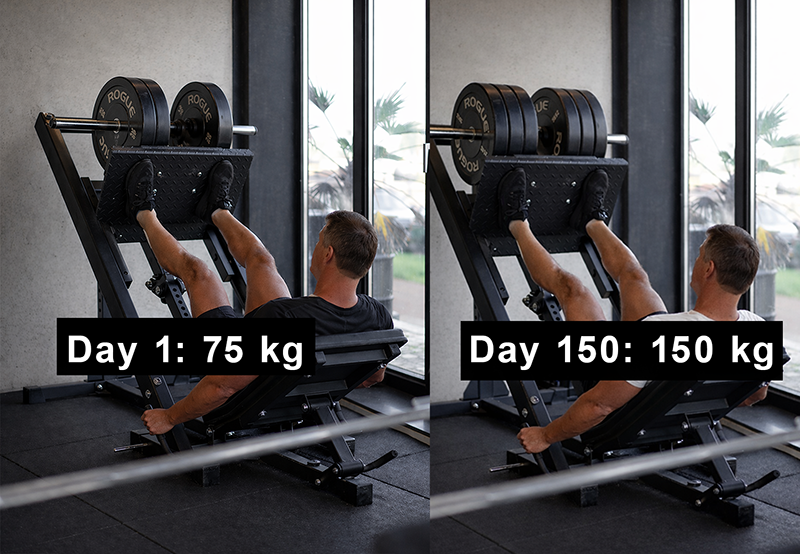
Strength is your capacity to produce force.
In the first four weeks, increases in strength are primarily neurological. Your brain and nervous system improve communication with your muscles, allowing you to generate more force without necessarily increasing muscle size yet.
Over time, this translates into measurable increases in performance.
Power combines strength and speed.
Within 90 days, you will begin to see improvements in your ability to produce force quickly. This is essential for athletic performance and functional movement such as jumping, sprinting, or lifting explosively.
Muscle growth begins early in a structured training program.
While visible changes may vary depending on nutrition and consistency, your muscle fibers are already adapting by increasing in size and density. This supports both strength and metabolic health.
Your muscles become more capable of sustaining repeated contractions over time.
This is particularly important for postural muscles, which play a key role in joint stability, alignment, and injury prevention. You will notice that exercises feel less fatiguing and that you can maintain proper form for longer durations.
Your ability to perform high-intensity efforts improves.
This includes sustaining near-maximal output for short durations, typically between 30 seconds and two minutes. You will recover faster between sets and tolerate higher training intensity.
Your cardiovascular system becomes more efficient at delivering and utilizing oxygen.
This leads to improved performance during moderate to high-intensity efforts lasting several minutes. You will notice improved breathing efficiency, lower heart rate at rest, and better overall conditioning.
Your ability to sustain continuous effort over longer periods increases.
This applies not only to training sessions but also to daily life. Energy levels become more stable, and fatigue is reduced during prolonged activity.
Beyond performance metrics, your body undergoes significant internal changes.
Cardiovascular adaptations include increased stroke volume, improved blood flow, and enhanced capillary density. Pulmonary function improves, allowing for more efficient oxygen exchange.
Your nervous system becomes more effective at coordinating movement and generating force.
Structurally, your bones become denser, and connective tissues such as tendons become stronger, improving overall durability.
At a cellular level, your body increases mitochondrial density, enhancing energy production. Additional benefits include improved metabolic regulation, better lymphatic function, and more stable internal balance.
Within 90 days, the most important changes are not always purely visual, but they are substantial.
You are improving how your body moves, produces force, sustains effort, and recovers. These adaptations form the foundation for long-term results, including body composition changes.
If the goal is to maximize results efficiently, combining hypertrophy-focused strength training with anaerobic conditioning provides the broadest range of adaptations with minimal wasted effort.
At Convoy, this is the standard approach.